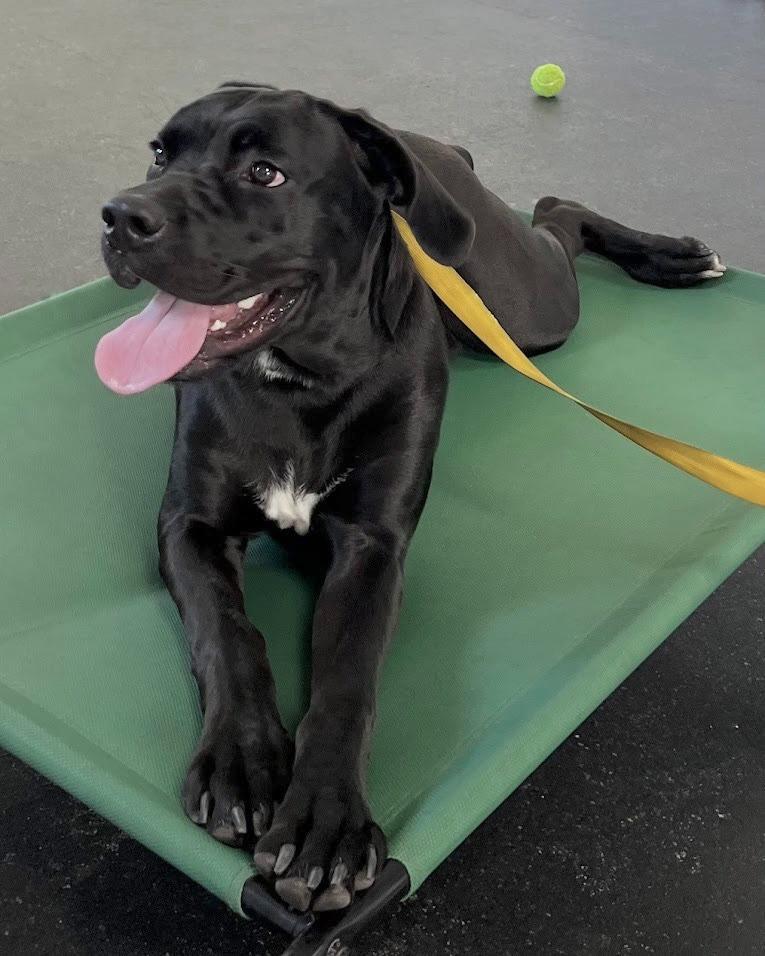
A dog that bites, snaps, or threatens to bite can quickly change how you live with them. You may start avoiding visitors, changing your walking route, keeping your dog away from other animals, or worrying about what could happen in an unpredictable situation.
If you are searching for how to stop a dog from biting, the first step is understanding that biting is not one specific behavior with one specific cause.
Fear, anxiety, resource guarding, reactivity, frustration, and aggression can all contribute to biting. In some cases, a dog may have already learned that using their teeth successfully makes an uncomfortable person, dog, or situation go away.
Because the potential consequences are serious, biting should not be approached with a generic training solution.
Why Do Dogs Bite?
Dogs can bite for many different reasons, and context matters.
A fearful dog that bites when a stranger reaches toward them is experiencing something very different from a dog guarding food or a dog that redirects onto their owner during an intense reaction toward another animal.
Some common factors associated with biting include:
- Fear or anxiety
- Resource guarding
- Reactivity
- Territorial behavior
- Frustration
- Feeling trapped or threatened
- Conflict with another animal
- Escalating aggressive behavior
Pain or illness can also cause sudden behavioral changes. If a dog begins displaying aggression or biting unexpectedly, particularly when the behavior is unusual for them, a veterinary examination may be appropriate.
Understanding what happens before, during, and after aggressive behavior helps provide a much clearer picture of what the dog is struggling with.
A Bite Usually Isn’t the First Warning Sign
Dogs often communicate discomfort before they bite.
The signs are not always dramatic. A dog may become stiff, stare, freeze, move away, guard an object, growl, show their teeth, or become increasingly reactive in certain situations.
These behaviors can be easy to overlook, particularly if the dog has never actually bitten anyone.
A growl, for example, is communication. The dog is telling you something about how they feel in that moment. Focusing only on stopping the growl without addressing what caused it can leave the underlying problem unchanged.
This is one reason it is worth addressing concerning behavior before it progresses to a bite.
Is It Aggression or Reactivity?
Reactivity and aggression can look similar from the other end of a leash.
A reactive dog may bark, lunge, growl, or become extremely worked up around another dog, person, vehicle, or environmental trigger. That behavior does not automatically mean the dog intends to bite.
However, intense reactions can still create unsafe situations, particularly when the dog becomes difficult for the handler to control.
Aggression involves behavior intended to threaten or cause harm, but even within aggression there can be different motivations.
Determining what you are actually seeing matters because training should be based on the individual dog rather than the label an owner has been given or found online.
Resource Guarding Can Escalate
Resource guarding deserves particular attention because it can occur during ordinary moments at home.
A dog may become uncomfortable when someone approaches their food, toys, treats, resting area, or another item they consider valuable. Some dogs may simply stiffen or move away with the object. Others may growl, snap, or bite.
It can be tempting to repeatedly take things away to show the dog that guarding is unacceptable, but confrontational interactions can increase conflict and potentially make the situation more dangerous.
If your dog is displaying resource guarding alongside growling, snapping, or other aggressive behavior, discuss the situation with a professional trainer rather than experimenting with different techniques at home.
Obedience Matters, But Aggression Training Isn’t Just Obedience
A dog can know how to Sit and still struggle with serious behavioral issues.
Basic obedience is valuable because it establishes communication between the dog and handler. Commands such as Place, Recall, Heel, Leave It, Out, and Drop It can become particularly important when navigating everyday situations.
But behavior modification involves looking beyond whether a dog knows commands.
A trainer also needs to consider what triggers the behavior, how intense the response is, whether the dog can disengage, what happens in different environments, and whether there is an established bite history.
The goal is to create better communication and more appropriate responses while giving the owner practical ways to handle their dog.
Don’t Wait for a Bite to Take Behavior Seriously
One of the most important distinctions when addressing aggressive behavior is whether the dog has already bitten a person or another animal.
You do not need to wait for that to happen before seeking professional help.
Repeated growling, snapping, lunging, resource guarding, or intense reactivity can be signs that your dog is struggling with situations they encounter in everyday life.
Addressing those concerns earlier gives you an opportunity to work on the behavior before the consequences become more serious.
Once a dog has a documented bite history, that information also needs to be taken into consideration when determining an appropriate training program.
Behavior Modification Training at K9s Place
For dogs experiencing behavioral challenges without a bite history, K9s Place offers a 3-Week Behavior Modification Board & Train.
This program is designed for dogs experiencing challenges such as anxiety, fear, resource guarding, reactivity, or aggression without a documented bite history.
Training includes:
- 10 basic obedience commands: Sit, Down, Stay, Place, Recall (Come), Heel, Quiet, Leave It, Out, and Drop It
- Leash etiquette training
- Socialization with people, dogs, and new environments
- 1 private training session at a location of your choice, including K9s Place, your home, or another agreed-upon location, a $150 value
- 1 Pack Walk, a $20 value
- 1-on-1 Owner Transfer Session on the final day
The program provides more time to work with dogs whose behavioral challenges require attention beyond foundational obedience alone.
Aggressive Dog Training for Dogs With a Bite History
A dog that has already bitten a person or another animal requires a different level of consideration.
K9s Place offers a 4-Week Aggressive Dog Board & Train, specifically designed for dogs with a documented bite history involving humans or other animals.
The program includes:
- 10 basic obedience commands: Sit, Down, Stay, Place, Recall (Come), Heel, Quiet, Leave It, Out, and Drop It
- Leash etiquette training
- Socialization with people, dogs, and new environments
- 1 private training session at a location of your choice, including K9s Place, your home, or another agreed-upon location, a $150 value
- 3 Pack Walks, a $60 value
Separating dogs with a bite history from dogs experiencing other behavioral challenges allows the training team to take the dog’s history and level of concern into account when discussing the appropriate program.
Start With a Training Evaluation
If you are concerned that your dog may bite, or your dog has already bitten someone, an online article cannot tell you exactly why it happened or what training your individual dog needs.
That is where an evaluation becomes important.
During a training evaluation at K9s Place, you can discuss the behavior you have been seeing, situations that tend to trigger it, your dog’s history, any previous bites or incidents, and the difficulties you are experiencing at home or in public.
From there, our training team can discuss which training option may be appropriate for your dog.
If you are looking for dog training in Melbourne, Florida for aggression, reactivity, resource guarding, or other behavioral concerns, contact K9s Place to schedule a training evaluation.
The earlier you understand what is driving the behavior, the sooner you can begin working toward safer, clearer communication with your dog.