
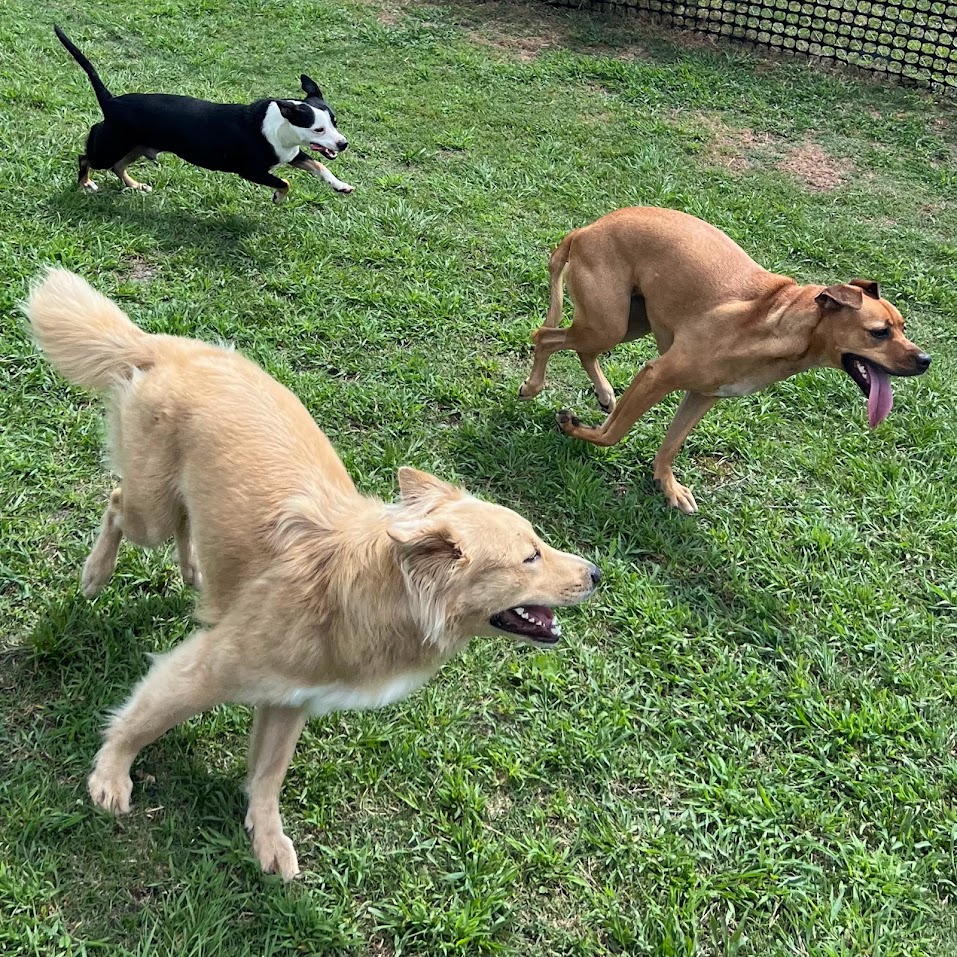
A dog chasing a cat can range from an annoying household habit to a serious safety concern. Maybe your dog becomes overly excited whenever the cat enters the room. Maybe they stare, stalk, bark, or immediately take off after them. In some cases, the behavior seems playful. In others, it can be much more intense.
If you are trying to figure out how to stop a dog from chasing a cat, it is important to look beyond the chase itself.
Dogs chase cats for different reasons, and understanding what is motivating your dog is an important part of determining how the behavior should be addressed.
Why Do Dogs Chase Cats?
There is no single reason every dog chases cats.
Some dogs become excited by movement and see the cat running as an invitation to play. Others may have little experience around cats and simply do not understand how they are expected to behave around them.
For some dogs, prey drive can also play a significant role.
Prey drive is an instinctive response that can cause a dog to become highly interested in pursuing moving animals. The intensity varies considerably between individual dogs and can be influenced by factors such as genetics, breed tendencies, past experiences, and temperament.
That distinction matters.
A dog attempting to play with a cat and a dog intensely fixating on a cat may display some similar behaviors, but the underlying motivation and potential risk can be very different.
Pay Attention to More Than the Chasing
The moments before a chase can tell you a lot about what is happening.
Some dogs immediately become alert when the cat enters the room. You might notice staring, a change in posture, whining, barking, pulling toward the cat, or difficulty responding to you.
Other dogs may seem relatively uninterested until the cat begins running.
These details are important because chasing is often only the most noticeable part of the behavior.
If your dog becomes so focused on the cat that they cannot easily disengage, that can be particularly concerning. The more intense the fixation, the more important it becomes to properly evaluate the behavior rather than assuming the dog simply wants to play.
Prey Drive Doesn’t Automatically Mean a Dog Can’t Live With Cats
Hearing the term “prey drive” can sound alarming, especially if you already have both dogs and cats in your home.
Having prey drive does not automatically mean a dog cannot coexist with a cat. Many dogs can learn appropriate boundaries around other animals.
However, prey drive should also be taken seriously.
Every dog is different, and there are situations where allowing unrestricted access between a dog and cat may not be appropriate. This is especially true when a dog displays intense fixation or when there is a significant size difference between the animals.
The goal should always be to prioritize safety rather than forcing an interaction.
Obedience Creates Better Communication
When a dog becomes interested in chasing a cat, having an established obedience foundation gives the owner a way to communicate with them.
One particularly useful command is Leave It.
Leave It teaches a dog to disengage from something and redirect their attention back to their handler. That can be valuable in many everyday situations, including when another animal catches the dog’s attention.
But knowing a command in a quiet room and responding to it around a moving cat are two very different things.
Distractions increase the difficulty of any command. A dog may understand Leave It perfectly during a training session but struggle to respond when instinct, excitement, or frustration takes over.
This is why obedience training is about more than simply teaching the meaning of a word. Dogs need to learn how to respond appropriately when distractions are present.
Don’t Let Chasing Become the Routine
When a dog repeatedly chases a cat around the house, the behavior can become increasingly established.
The dog sees the cat move, gives chase, and experiences whatever excitement or satisfaction comes from the interaction. If that sequence happens repeatedly, it can become a familiar pattern.
Meanwhile, the cat may begin changing its behavior too.
A cat that does not feel comfortable moving freely through the home may spend more time hiding, avoid certain rooms, or become stressed by the dog’s presence.
This is why chasing should not simply be dismissed as “the dog being a dog,” particularly when one animal is consistently trying to escape the other.
Management and Training Serve Different Purposes
Preventing your dog from having unrestricted opportunities to chase the cat is an important part of keeping both animals safe.
However, management and training are not the same thing.
A gate, leash, crate, or separate room can prevent an interaction in the moment, but those tools alone do not necessarily teach your dog how to behave when the cat is present.
Training focuses on creating clearer expectations and better communication between you and your dog.
Depending on the individual dog, this may involve foundational obedience, impulse control, responding around distractions, and learning to disengage when asked.
The appropriate approach depends on what is actually motivating the behavior.
Can You Train a Dog to Stop Chasing Cats?
In many situations, training can significantly improve a dog’s behavior around cats. The more important question is what realistic expectations should look like for your particular dog.
There is a major difference between teaching better household manners and trying to completely eliminate an instinctive response.
Some dogs may eventually become comfortable and trustworthy around a household cat. Others may always require some level of supervision or management.
That is not something that can be determined from a single behavior described online.
Looking at the dog’s overall temperament, level of fixation, obedience, history around other animals, and response to redirection provides a much clearer picture.
When Should You Talk to a Professional Dog Trainer?
If your dog is consistently chasing your cat, intensely fixating on them, or becoming difficult to redirect, professional training can help you better understand what you are dealing with.
It is especially important to seek help if:
- Your dog intensely stares at or stalks the cat
- Your dog cannot disengage once focused on the cat
- Chasing is becoming more frequent or intense
- Your cat appears frightened or avoids areas of the home
- Your dog has attempted to grab or catch the cat
- You are unsure whether the behavior is playful or predatory
- You do not feel confident managing interactions safely
Rather than relying on general advice, an evaluation allows a trainer to learn more about your individual dog and the circumstances surrounding the behavior.
Dog Training in Melbourne, Florida
If you are looking for dog training in Melbourne, Florida because your dog is chasing your cat or struggling with another behavior at home, K9s Place can help you determine the next step.
During a training evaluation, you can discuss the specific difficulties you are having with your dog, what you have observed around your cat, your dog’s training history, and the goals you have for them.
Our training programs work on foundational obedience skills including Sit, Down, Stay, Place, Recall (Come), Heel, Quiet, Leave It, Out, and Drop It, as well as leash etiquette, socialization, exposure to different environments, and crate training.
Schedule a training evaluation at K9s Place to discuss the challenges you are experiencing with your dog and learn more about the training options available for you and your dog.