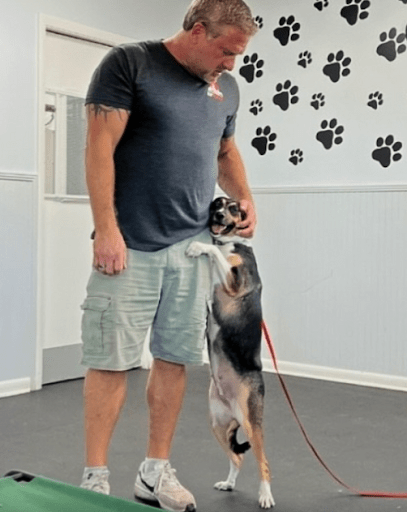
Jumping on people is one of the most common behavior issues dog owners deal with. It often starts as something harmless or even cute, but over time it can become frustrating, embarrassing, or even unsafe.
The good news is that jumping is a behavior that can be corrected with the right approach. Understanding why your dog jumps is the first step toward stopping it for good.
Why Dogs Jump on People
1. Excitement and Overstimulation
Many dogs jump simply because they’re excited. When you come home, when guests arrive, or when they meet someone new, they don’t know how to contain that energy.
You can start by waiting for calm behavior before giving attention, but excitement-based jumping often needs structured reinforcement. Programs focused on dog training help dogs learn how to stay grounded and respond calmly, even in high-energy situations.
2. They’re Seeking Attention
Dogs quickly learn that jumping gets a reaction. Even if you push them away or say “no,” they still got attention, which reinforces the behavior.
The key is consistency. Ignoring jumping and rewarding calm behavior works over time, but it has to be done the same way every time. Structured training helps reinforce this consistency so your dog understands that calm behavior is what earns attention.
3. Lack of Boundaries and Structure
If your dog has never been taught how to greet people properly, they will default to jumping. Without clear expectations, dogs simply do what feels natural.
This is where structured programs, like private dog training lessons, can make a big difference. They focus on teaching clear boundaries and replacing jumping with more appropriate behaviors like sitting calmly.
4. It Was Accidentally Encouraged
Many dogs are unintentionally trained to jump as puppies. People greet them face-to-face, encourage excitement, or reward jumping with attention.
Over time, that behavior becomes a habit. Breaking that habit requires replacing it with a new one. Professional training helps reshape those patterns so your dog learns what behavior is expected instead.
How to Stop Your Dog From Jumping
1. Ignore the Jumping Completely
When your dog jumps, avoid eye contact, talking, or touching them. Any reaction can reinforce the behavior.
This can be harder than it sounds, especially with guests. Training helps create consistency across everyone your dog interacts with, which is critical for long-term success.
2. Reward Calm Behavior Immediately
The moment your dog has all four paws on the ground, reward them with attention, praise, or treats. Timing matters here.
Training helps sharpen this timing and ensures your dog clearly understands which behavior is being rewarded.
3. Teach an Alternative Behavior
Instead of just saying “don’t jump,” give your dog something else to do. A common approach is teaching a “sit to greet” behavior.
Structured dog training programs reinforce this consistently so your dog automatically sits instead of jumping when greeting people.
4. Be Consistent With Everyone
One of the biggest challenges is inconsistency. If one person allows jumping and another doesn’t, your dog will stay confused.
Professional training creates a system that both you and your dog can follow, making it easier to maintain consistent expectations across all situations.
When Jumping Becomes a Bigger Problem
For some dogs, jumping is more than just excitement. It can be paired with:
- lunging
- barking
- lack of impulse control
- reactivity toward people or dogs
In these cases, jumping is part of a larger behavior pattern. Dogs showing these signs may benefit from more structured programs like aggressive dog training, which focuses on impulse control, calm behavior, and safer interactions.
How Professional Training Helps
Stopping jumping isn’t just about correcting one behavior. It’s about teaching your dog how to behave in a variety of situations.
Professional training helps:
- build impulse control
- create consistent behavior patterns
- reinforce calm greetings
- improve overall obedience
Whether your dog needs basic obedience or more advanced behavior work, structured dog training provides the guidance needed to create lasting results.
When to Take the Next Step
If your dog is jumping on guests, strangers, or children, it’s a sign they need clearer structure and guidance. The longer the behavior continues, the more ingrained it becomes.
With the right training approach, jumping can be replaced with calm, controlled behavior that makes interactions more enjoyable for both you and your dog.
Get started with a training evaluation and let our team help you build better habits with your dog.